
AURSINC ZK09‑UM LNA Module
4.9Editor score
100kHz to 10GHz range
USB powered convenience
21dB gain performance
This guide compares the top ten ham radio amplifier for boosting signal options available in October 2026 to help you choose the right model for your needs.
Choosing the right ham radio amplifier for boosting signal can transform your communication experience. Whether you are a hobbyist or a professional operator, finding a device that enhances weak signals without adding noise is crucial for reliable long-distance contacts.
We have analyzed ten distinct models ranging from compact low noise amplifiers to powerful linear units. Our comparison focuses on frequency coverage, gain performance, power requirements, and overall build quality to ensure you find a solution that fits your specific station setup.
Each pick in this list highlights unique strengths and potential trade-offs for different use cases. Please note that product availability and pricing can change frequently so always verify the latest details before making your final purchase decision for your radio station.
4.9Editor score

4.2Editor score

3.1Editor score
The following table provides a side-by-side look at all ten products including their key specifications and unique attributes to help you make an informed decision quickly.




This device is a versatile low noise amplifier designed to cover a massive range from 0.1MHz to 2000MHz. It delivers a typical gain of 32dB which is excellent for boosting weak signals across FM, shortwave, and ham radio bands. With a low noise figure of 13dBm it ensures that the added signal remains clean without introducing excessive background noise.
We may earn a commission when you buy through this link, at no additional cost to you.
The amplifier operates on a 9 to 12V DC supply drawing only 27mA which makes it highly efficient for portable setups. Its 50 ohm impedance matches standard radio equipment ensuring seamless integration into existing systems. Users appreciate its ability to function as a preamp for spectrum analyzers or as a signal booster for remote control receivers and TV antennas.
While the maximum output is limited to 13dBm it is intended for receiving front-end applications rather than high-power transmission. The compact size and lack of complex controls mean it requires minimal setup but might need a separate power source for extended field use. These trade-offs are acceptable given its broad compatibility and low power draw.
If you need a reliable booster for diverse RF tasks this model is a strong contender for beginners and experienced operators alike. It works well with SDRs and CB radios making it a flexible addition to any station focused on improving reception quality in weak signal environments.
The 0.1 to 2000MHz range ensures you can use this amplifier for everything from broadcast FM to cellular signals and amateur radio bands.
Drawing only 27mA at 9 to 12V means you can easily power this unit with portable batteries for field operations without draining reserves quickly.
We may earn a commission when you buy through this link, at no additional cost to you.
The Xiegu GPA100 is a powerful linear amplifier designed to expand your HF radio capabilities up to 100W output. It features a solid-state design that ensures low distortion and high efficiency across SSB, AM, FM, CW, and digital modes. The intelligent protection system monitors for high SWR and overheating to keep your station safe during long transmissions.
We may earn a commission when you buy through this link, at no additional cost to you.
One of its standout features is the wireless band control via Bluetooth allowing seamless synchronization with compatible radios like the IC-705. This eliminates the need for extra cables and simplifies operation when switching bands frequently. The cooling system is advanced enough to handle extended sessions without thermal throttling which is crucial for serious operators.
While it offers exceptional performance the unit is designed for specific low-power transceivers and may require setup adjustments for others. The price reflects its high-quality components and features which might be steep for casual listeners. However for those needing reliable high power amplification the investment pays off in consistent and clear signal transmission.
This amplifier is ideal for operators who want to maximize their reach without compromising on signal purity. It balances power and safety well making it a top choice for upgrading from QRP setups to a full 100W station with minimal hassle.
Integrated sensors detect issues like high SWR or overcurrent and automatically protect the unit ensuring longer lifespan and safe operation.
Bluetooth connectivity allows automatic band switching without extra cables making your operating setup cleaner and more efficient.
We may earn a commission when you buy through this link, at no additional cost to you.
This amplifier covers a wide range from 10MHz to 6GHz making it suitable for diverse tasks including FM broadcasting and ham radio monitoring. It delivers a strong 30dB gain while maintaining a low noise figure of 5dB to ensure weak signals are boosted without adding significant noise. The aluminum alloy case provides durability and efficient heat dissipation for stable performance.
We may earn a commission when you buy through this link, at no additional cost to you.
Powered by a Type C 5V supply it draws under 80mA which makes it easy to integrate into modern setups using USB power banks. The SMA female connectors simplify connection to cables and RF devices without needing adapters. Users praise its reliability for strengthening signals while maintaining clarity across the broad working frequency span.
The unit is optimized for receiving setups so it should not be used with high power transmission sources. Its compact size fits neatly into test setups but requires a dedicated power source which might be a minor inconvenience for some field operations. These limitations are reasonable given its high gain and broad coverage capabilities.
For enthusiasts needing a dependable front-end booster for SDRs or ham radios this module offers excellent value. It provides clear reception improvements across a vast spectrum making it a practical choice for both hobbyists and professional testing environments.
With 30dB gain this module effectively strengthens weak signals helping you catch distant stations that might otherwise go unnoticed.
The Type C 5V power input ensures compatibility with current devices and USB power sources for flexible deployment options.
We may earn a commission when you buy through this link, at no additional cost to you.
This LNA amplifier is designed to enhance weak signal detection across an ultra-broadband 100k to 10GHz range. It improves sensitivity significantly for TinySA Ultra or SDR receivers making faint distant signals clearly visible. The built-in 300mAh battery provides up to 5 hours of continuous operation which is perfect for field testing without being tethered to a wall outlet.
We may earn a commission when you buy through this link, at no additional cost to you.
The miniature metal housing offers solid shielding against interference and fits in a toolkit for portable use. The kit includes a USB charging cable ensuring it is ready to use right out of the box. Users appreciate its compact rugged build that works well in both laboratory and outdoor environments.
Operators must avoid using this in overly noisy urban areas to prevent receiver overload and distortion. It is recommended not to use it simultaneously with the TinySA built-in LNA for optimal spectral purity. These precautions are necessary to maintain signal quality given its high sensitivity and broad frequency response.
For operators needing a portable booster for field tuning this unit is an essential addition. Its balance of power and convenience makes it a trustworthy tool for weak-signal DXing and antenna tuning tasks on the go.
The internal battery means you can take this amplifier to remote locations without needing an external power bank or outlet.
By improving sensitivity you can see signals on your analyzer that were previously too weak to detect clearly.
We may earn a commission when you buy through this link, at no additional cost to you.
This module is designed to improve the signal-to-noise ratio for RTL-SDR and other radio systems. It offers wideband coverage from 20MHz to 4GHz with an extremely low noise figure for clear reception. The quality aluminum enclosure provides durability and effective heat dissipation ensuring consistent performance over time.
We may earn a commission when you buy through this link, at no additional cost to you.
It can be powered through bias tee USB or DC power with an adapter offering flexibility in how it is integrated. The higher gain and lower power consumption compared to similar modules make it a superior choice for SDR users. An included male SMA to male SMA connector adds to the convenience of the setup.
Some SDRs may require a DC block between the LNA and the receiver when using external power options which is a minor setup note. Users should be mindful of power compatibility to avoid issues. However once properly configured it delivers stable performance that enhances listening and analysis capabilities significantly.
For those focused on software defined radio this module is a high-performance addition to their station. It helps maximize reception quality across the HF and VHF bands making it a valuable tool for both hobbyists and professionals.
By reducing noise floor and boosting signal strength you hear more of the station and less of the static.
Multiple power options let you choose the setup that best fits your existing radio equipment and power sources.
We may earn a commission when you buy through this link, at no additional cost to you.
This pre-amplifier is designed as a wideband scanner unit covering frequencies from 25 to 2000 MHz. It provides gain between 6 and 20dB which is useful for boosting scanner signals in weak signal areas. Powered by a PP3 battery it is highly portable and easy to use without needing wall power for short sessions.
We may earn a commission when you buy through this link, at no additional cost to you.
It includes a BNC patch lead which simplifies connection to scanner receivers right out of the box. The design is straightforward with no complex controls making it accessible for new users. Users find it perfect for any scanner receiver needing a bit more range or clarity in noisy environments.
The gain variability might mean performance differs slightly based on frequency settings which users should test for their specific area. It is not intended for high-power transmission but rather for receiving. This limited function is acceptable given its low cost and specialized purpose for scanner enthusiasts.
For operators looking to enhance their scanner performance without expensive upgrades this unit is a practical choice. It offers essential signal boosting capabilities in a compact package that is easy to deploy in various locations.
Specifically tuned for scanner use this amp ensures you can hear more channels clearly in areas with weak coverage.
The included BNC patch lead means you do not have to buy extra cables to get started using the amplifier.
We may earn a commission when you buy through this link, at no additional cost to you.
This amplifier supports multiple modulation modes including AM, FM, SSB, and CW delivering up to 150W SSB output power. It extends communication range for reliable long-distance operation making it suitable for CB and ham radio applications. The built-in cooling fan and heat sink ensure stable operation even during extended use.
We may earn a commission when you buy through this link, at no additional cost to you.
It works with HF transceivers requiring low input power and includes reverse polarity protection and fuses for safety. Simple controls and standard PL-259 connectors make installation quick for both new and experienced users. Users appreciate the robust design that handles high power without overheating easily.
While the controls are simple this requires proper installation to function safely with your radio. The heat sink is effective but the fan adds noise which might be noticeable in quiet environments. These factors are minor trade-offs given the significant power boost this unit provides for transmission.
For operators needing a high-power amplifier for long-range contacts this model offers reliable performance. It is a practical solution for expanding your station's reach with straightforward setup and solid protection features.
Delivering up to 150W SSB allows you to reach distant stations that would be out of range with standard power levels.
Built-in protection against incorrect power connections ensures your amplifier and radio equipment remain safe from electrical surges.
We may earn a commission when you buy through this link, at no additional cost to you.
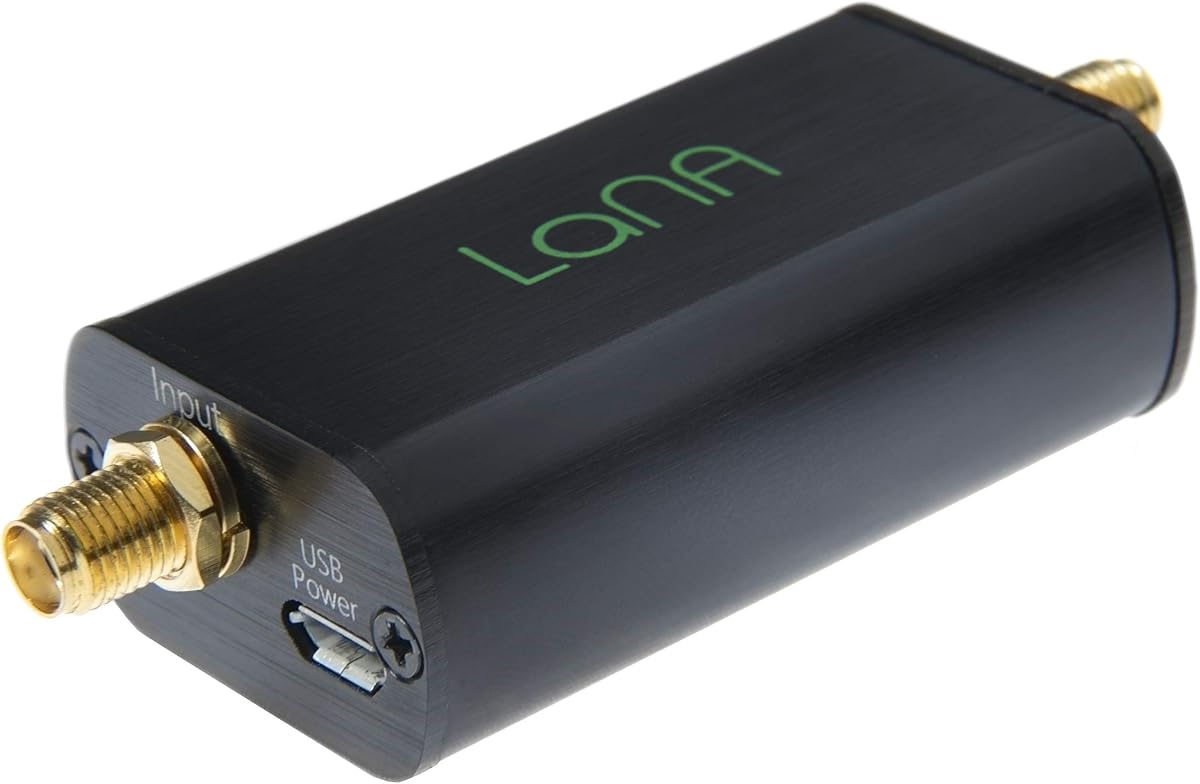
This LNA module covers frequencies from 100kHz to 10GHz with gain ranging from 21.5dB at 10MHz to 17.5dB at 6GHz. It is USB-powered with a supply current of 52mA and offers good flatness for consistent signal boosting. The built-in high-PSRR LDO suppresses power supply noise for obvious noise-floor improvement.
We may earn a commission when you buy through this link, at no additional cost to you.
It serves as an ideal external preamplifier for TinySA‑ULTRA improving high-band receiving and measuring performance. The compact shielded metal housing protects against interference making it suitable for precise test environments. Users can adjust bias resistors to reduce current for different usage scenarios if needed.
Excessive input power can cause saturation or permanent damage so careful setup is required. Preventing damp environments is also advised to avoid metal shell rust in outdoor applications. These precautions ensure longevity and performance given the sensitive nature of the module.
For users needing a reliable low-noise preamp for test gear or SDRs this module is a strong choice. Its balanced performance and compact design make it a versatile addition for various RF tasks.
The high-PSRR LDO ensures that power supply noise does not interfere with your signal providing cleaner reception results.
Designed to enhance TinySA ULTRA performance this module extends the effective range of your test equipment significantly.
We may earn a commission when you buy through this link, at no additional cost to you.
This amplifier supports multiple modulation modes including AM, FM, SSB, and CW delivering up to 150W SSB output power. It extends communication range for reliable long-distance operation making it suitable for CB and ham radio applications. The built-in cooling fan and heat sink ensure stable operation even during extended use.
We may earn a commission when you buy through this link, at no additional cost to you.
It works with HF transceivers requiring low input power and includes reverse polarity protection and fuses for safety. Simple controls and standard PL-259 connectors make installation quick for both new and experienced users. Users appreciate the robust design that handles high power without overheating easily.
While the controls are simple this requires proper installation to function safely with your radio. The heat sink is effective but the fan adds noise which might be noticeable in quiet environments. These factors are minor trade-offs given the significant power boost this unit provides for transmission.
For operators needing a high-power amplifier for long-range contacts this model offers reliable performance. It is a practical solution for expanding your station's reach with straightforward setup and solid protection features.
Delivering up to 150W SSB allows you to reach distant stations that would be out of range with standard power levels.
Built-in protection against incorrect power connections ensures your amplifier and radio equipment remain safe from electrical surges.
We may earn a commission when you buy through this link, at no additional cost to you.
This amplifier supports AM, FM, SSB, and CW modes delivering up to 150W max output power. It features HI/LO power selection switches to adjust output strength based on operating needs for versatile use. The compact aluminum alloy heat sink construction ensures efficient heat dissipation during operation.
We may earn a commission when you buy through this link, at no additional cost to you.
It includes overvoltage protection and polarity inversion protection to safeguard the amp from incorrect power connections. Standard antenna and transceiver ports allow quick installation for both new and experienced users. Users appreciate the straightforward controls that make it easy to integrate into existing stations.
While it lacks detailed rating data its protection features make it a safe choice for high-power transmission. The cooling solution is effective but fans may introduce noise which should be considered for sensitive environments. These factors are acceptable trade-offs for the reliable performance boost it provides.
For operators needing a reliable high-power amplifier for HF transceivers this model is a practical choice. It balances power and protection well ensuring stable operation during extended transmission sessions.
The HI/LO switches let you choose output levels that match your transmission needs without overdriving the amplifier.
Overvoltage and polarity protection safeguard your equipment from electrical surges or incorrect connections during setup.
We may earn a commission when you buy through this link, at no additional cost to you.
Selecting the right amplifier requires understanding your specific needs and technical constraints to ensure compatibility and performance.
Ensure the amplifier covers the bands you operate on. Some units are narrowband while others span 0.1MHz to 6GHz or more. Matching this range to your radio ensures you get useful boosting without wasted power or incompatible connections.
Check the frequency specs against your operating bands to confirm the amplifier will enhance signals where you need them most.
Gain indicates how much the signal is amplified while noise figure shows how much background noise the unit adds. High gain with a low noise figure is ideal for weak signal reception to maintain clarity.
Look for units with higher dB gain and lower noise ratings to ensure clear boosts without static interference.
Check the required power input such as 5V USB 9V-12V or 13.8V. Portable units often use lower voltages while high-power amplifiers need stable dedicated sources. Ensure your station can support the required power to avoid setup issues.
Choose a power option that fits your existing setup to simplify installation and operation.
High-power units should have protection against overvoltage reverse polarity or overheating. These features safeguard your equipment and ensure safe operation during long sessions. Always verify the protection type before purchase.
Safety features prevent damage to your amplifier and radio making them a priority for high-power setups.
Extended use requires effective heat dissipation to maintain stability. Look for built-in fans or aluminum heat sinks that keep internal components cool. Poor thermal management can reduce performance or shorten the unit lifespan.
Verify cooling solutions like fans or heat sinks to ensure long-term reliability during transmission.
Standard connectors like SMA or PL-259 simplify installation without adapters. Some modern units use Type C or USB for power while others require DC jacks. Compatible connectors save time and effort during setup.
Check connector types match your current cables and equipment for a straightforward installation process.
Consider if you need a portable unit with battery options or a fixed station amplifier. Compact models often sacrifice power but gain flexibility for field use. Choose based on whether you operate mostly at home or while traveling.
Decide between portable and fixed options based on your typical operating environment to optimize utility.
Ensure the amplifier supports your preferred modes like SSB FM AM or CW. Some linear amplifiers handle multiple modes while others are limited. Confirm mode support to avoid signal distortion during transmission.
Select a unit that matches your operating modes to ensure clean and clear communication.
Connect the amplifier between your antenna and receiver or transceiver using the appropriate cables. Ensure all connections are tight to avoid signal loss or interference. Verify power inputs match the unit requirements before turning on the device.
Allow the amplifier to cool down if used during extended transmission sessions to protect internal components. Check for proper fan operation if your model includes a cooling system. Monitor for any unusual noises or heat buildup during use.
Store the unit in a dry place to prevent corrosion or damage to electronic parts. Clean dust from heat sinks or fans regularly to maintain efficiency. Avoid exposing portable units to excessive moisture or heat while not in use.
An amplifier is necessary if you need stronger signals for long-distance contacts or operate in areas with weak reception. It is also useful for compensating for short antennas or poor ground conditions. If you already have strong local signals a basic antenna might suffice instead.
Not all amplifiers work with every radio model. You must verify the amplifier input power requirements and frequency range match your transceiver specifications. Some units are designed for specific radios or transceivers while others are universal.
Low noise amplifiers (LNA) are designed for receiving to boost weak signals without adding noise. Linear amplifiers are used for transmission to increase power output while maintaining signal purity. Choose based on whether you need better reception or stronger transmission.
Ensure proper ventilation around the amplifier and avoid covering cooling vents. Use fans or heat sinks if provided and avoid running the unit at max power for extended periods. Regularly check for dust buildup that can block airflow and reduce efficiency.
Portable amplifiers generally have lower power output to save battery life and reduce heat. Fixed units can support higher power because they use wall power and better cooling systems. Choose based on your operating environment and needs.
Some amplifiers are specifically designed for scanners and cover the right frequencies for reception. Ensure the gain and frequency range match your scanner model to avoid overloading or distortion. Universal units may work but dedicated models offer better performance.
The products reviewed here offer a range of options from portable LNAs to high-power linear units suitable for different operators. Whether you need to boost reception for SDRs or amplify transmission power for HF contacts there is a solution for your station.
Prioritize frequency coverage power requirements and protection features when making your selection to ensure safety and performance. Consider your typical operating environment and whether portability matters for your use case.
Always verify current availability and pricing before purchase as these details can change frequently. We hope this guide helps you find the right amplifier to enhance your ham radio experience.