
DAE DDM730 KIT 120/240V
5.0Editor score
Internal CT Design
Din Rail Mount
Cloud Ready
This guide compares the top electric sub meters for landlords and solar users, reviewing features like accuracy and communication protocols to help you choose
Selecting the right electric sub meter is crucial for managing energy costs and monitoring consumption across multiple circuits or tenants. These devices provide precise data that helps landlords bill fairly and homeowners track solar production efficiently.
We analyzed ten top-rated models based on accuracy, compatibility, and ease of installation. Our evaluation covers single-phase and three-phase options suitable for residential and light industrial applications including RV parks and workshops.
Each pick highlights key strengths like Modbus support or cloud integration to help you find the best fit for your needs. Prices and availability change frequently so verify current details before purchasing to ensure you get the latest value.
5.0Editor score
4.5Editor score

4.2Editor score
The following table provides a side-by-side comparison of all ten electric sub meters analyzed in this guide. Use this overview to quickly identify key specifications and features that match your specific electrical system requirements and monitoring goals.




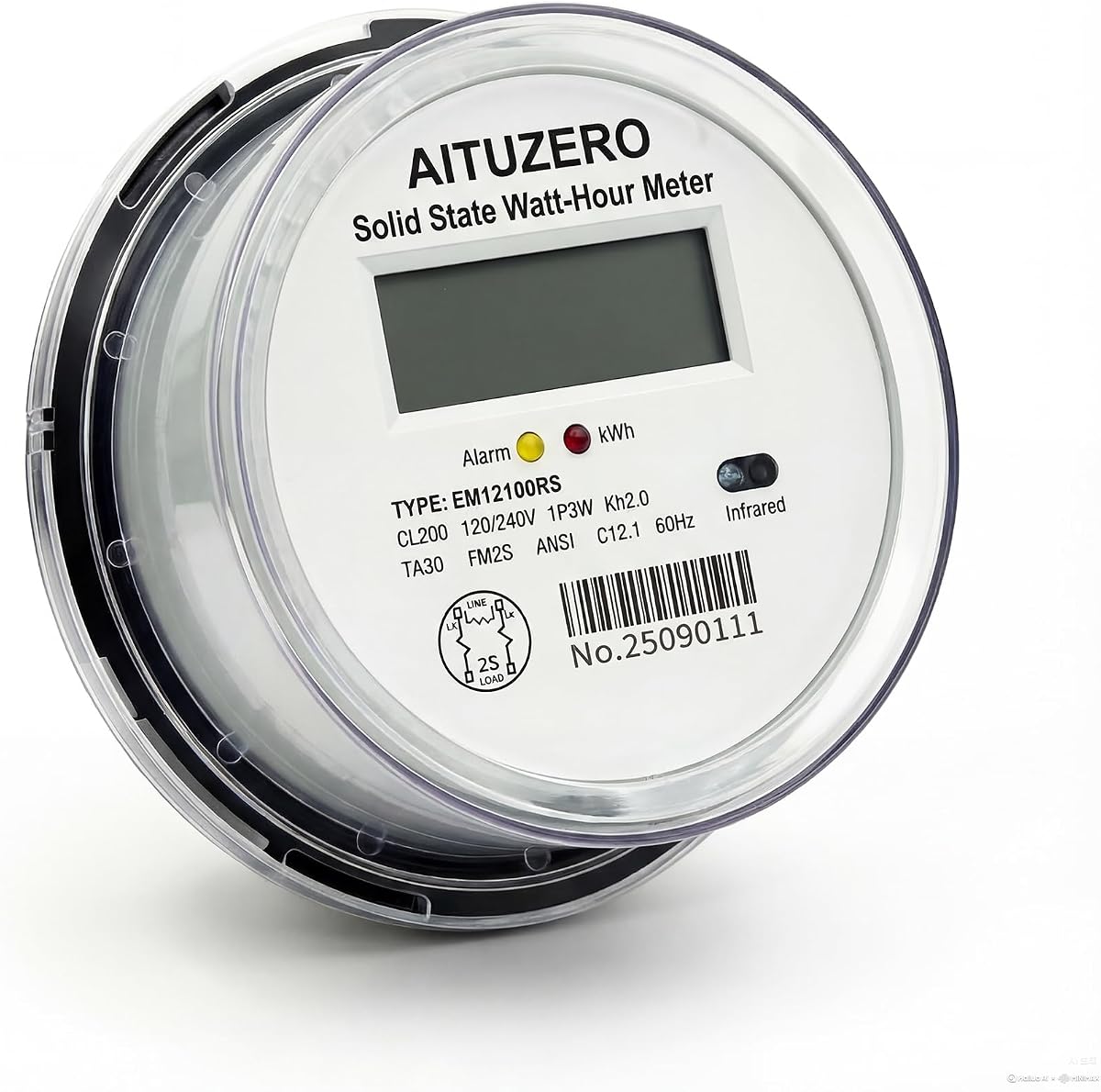
This digital energy meter stands out as a top choice for landlords and homeowners needing reliable sub-metering. With a rating of 4.5 stars it offers a blend of accuracy and ease of use that satisfies most residential and light industrial needs.
We may earn a commission when you buy through this link, at no additional cost to you.
Its ANSI Form 2S plug-in design makes installation straightforward in standard meter sockets or sub-panels. The bright LCD display cycles through key data like voltage and current ensuring users can monitor real-time power usage without complex setups.
While it performs exceptionally well for billing and energy tracking it does require a compatible socket base for installation. Users must ensure their existing infrastructure supports Form 2S connections to avoid additional adapter costs.
We recommend this meter for anyone managing rental properties or monitoring solar setups. Its solid-state design ensures long-term stability and the pulse output allows seamless integration with external monitoring systems.
The meter supports import/export tracking making it ideal for hybrid solar systems where energy flows both ways between grid and battery.
EEPROM memory ensures critical usage data persists even during power outages preventing loss of billing records or consumption history.
We may earn a commission when you buy through this link, at no additional cost to you.
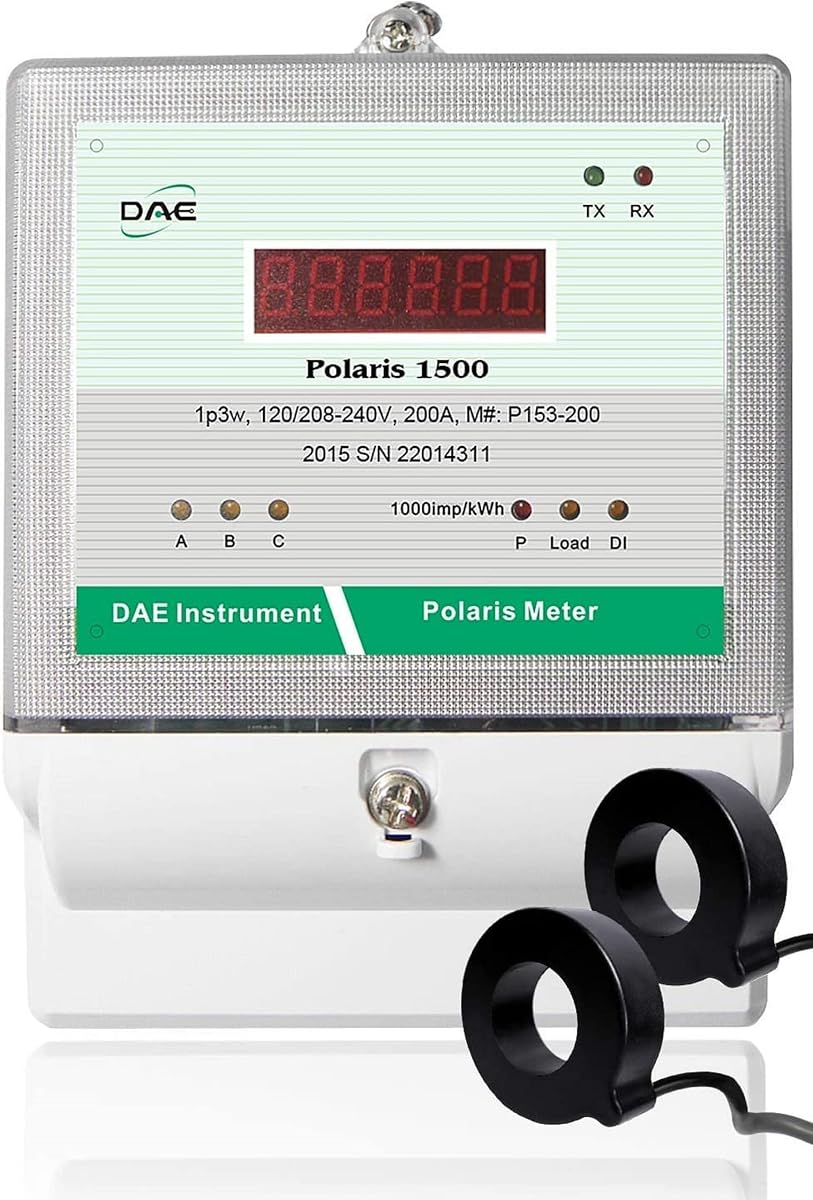
The DAE DDM730 KIT earns top marks for affordability and ease of installation. With a perfect 5.0 rating from users it simplifies energy monitoring by integrating current transformers directly into the unit for a cleaner setup.
We may earn a commission when you buy through this link, at no additional cost to you.
Its pass-through design allows two hot wires to connect through the meter while the neutral remains bypassed. This configuration supports both 120V and 240V circuits within a standard residential panel without requiring bulky external components.
The main trade-off is its 100A capacity which might limit use in larger main panels. Additionally users must house it indoors or use a separate watertight enclosure if exposed to weather conditions.
We recommend this for small businesses or apartments needing cost-effective metering. Its compatibility with cloud gateways enables remote monitoring without extensive IT knowledge.
The internal CT design reduces wiring complexity by eliminating the need to install separate external current transformers on every circuit.
Connecting to a cloud gateway allows landlords to track tenant usage and generate bills remotely through standard web browsers or apps.
We may earn a commission when you buy through this link, at no additional cost to you.
The E-Mon D-Mon series represents the gold standard for precision metering in professional environments. Designed for commercial applications it meets Class 1000 accuracy requirements ensuring billing data is reliable and dispute-free.
We may earn a commission when you buy through this link, at no additional cost to you.
Its ability to handle both 1 and 2 phase systems adds flexibility for varied electrical infrastructures. This adaptability makes it a robust choice for facilities where power systems may change or differ across zones.
The higher cost reflects its rigorous testing and durability standards. Users should expect to hire a qualified electrician for installation due to its advanced configuration requirements and safety protocols.
We recommend this for industrial clients or large property managers. Its precision supports accurate energy tracking and helps optimize costs in high-load environments.
Engineered for heavy industrial use this unit withstands harsh conditions and electrical fluctuations better than standard residential meters.
The Class 1000 accuracy ensures that billing records are precise reducing the risk of financial discrepancies between tenants and providers.
We may earn a commission when you buy through this link, at no additional cost to you.
The Digital Electric Sub Meter CL200 shines for solar applications with dedicated import/export measurement capabilities. Its 4.8 rating reflects exceptional performance in tracking energy flow both from the grid and to it.
We may earn a commission when you buy through this link, at no additional cost to you.
The reverse current LED offers immediate visual feedback when energy flows backward helping users verify solar inverter performance instantly. This feature is crucial for maintaining system safety and efficiency in renewable energy setups.
Setting up the RS485 Modbus interface requires some technical knowledge but enables centralized monitoring across multiple meters. Users without network expertise might find initial configuration challenging compared to simpler plug-and-play units.
We recommend this for homeowners or businesses with solar installations. Its precision in handling bidirectional power flow ensures accurate net metering and system analysis.
The meter tracks both import and export kWh allowing detailed analysis of how solar production offsets household consumption.
RS485 Modbus communication enables integration with advanced energy management systems for comprehensive facility-wide monitoring.
We may earn a commission when you buy through this link, at no additional cost to you.
The Series 2000 offers a robust solution for systems requiring 200A capacity and outdoor durability. While user ratings are lower at 3.2 its specs confirm it handles larger loads effectively in industrial or main panel applications.
We may earn a commission when you buy through this link, at no additional cost to you.
Its enclosure is rated for outdoor use protecting the internal electronics from environmental factors like rain or temperature swings. This makes it a solid choice for pedestal installations or detached garage metering.
The lower rating suggests some complexity in setup or occasional calibration issues reported by users. Careful attention to installation guidelines is necessary to ensure optimal performance and longevity in the field.
We recommend this for main service metering needs in commercial or large residential properties. Its capacity and durability make it suitable for high-demand environments.
The 200 amp rating allows it to handle main feeder loads without the need for additional external current transformers.
Designed for outdoor mounting the robust enclosure safeguards sensitive electronics against moisture and temperature extremes.
We may earn a commission when you buy through this link, at no additional cost to you.
This kit is built for revenue-grade accuracy meeting national standards for billing and utility applications. A 4.5 rating confirms its reliability for landlords and property managers needing precise data for tenant billing.
We may earn a commission when you buy through this link, at no additional cost to you.
Being UL CTEP approved adds a layer of trust ensuring the meter meets rigorous quality and safety tests. The inclusion of RS485 allows it to connect to gateways for automated remote data collection.
The requirement for external CTs adds complexity to the installation process. Users must ensure proper sizing and wiring to maintain the 0.5% accuracy standard across all monitored circuits.
We recommend this for large commercial buildings or apartment complexes. The billing reporting tools simplify tenant management and ensure financial transparency.
Meeting revenue-grade standards ensures the data is accurate enough for official billing disputes and utility audits.
Cloud integration allows property managers to download reports without visiting each unit saving time and operational costs.
We may earn a commission when you buy through this link, at no additional cost to you.
The DEM730P is tailored for smaller circuits like lighting or small appliance feeds. With a 4.4 rating it balances compact design and reliable performance for sub-panel monitoring in residential or office settings.
We may earn a commission when you buy through this link, at no additional cost to you.
Its internal CT design reduces installation time by eliminating the need to source separate external sensors. This makes it a quick solution for adding metering to existing panels without extensive retrofitting.
While effective for low-demand circuits it cannot handle main service loads above 50A. Users planning for future expansion might need to choose a higher capacity model to avoid replacement costs.
We recommend this for individual room monitoring or dedicated equipment circuits. Its cloud compatibility adds value for facilities needing remote oversight of specific areas.
The built-in current transformers reduce the need for external components making it easier for DIY installers to connect properly.
RS485 connectivity ensures it can be part of a larger automated network for facility-wide energy management.
We may earn a commission when you buy through this link, at no additional cost to you.
For industrial or multi-phase facilities this kit provides essential three-phase monitoring. Its 4.5 rating confirms reliability in demanding environments where balanced energy tracking across all phases is critical.
We may earn a commission when you buy through this link, at no additional cost to you.
The 120-480V range allows flexibility for varied industrial equipment and commercial main panels. This versatility reduces the need for multiple specialized meters across different facility sections.
Three-phase wiring is more complex than single-phase setups requiring careful phase balancing during installation. Users without electrical experience should hire a licensed professional to avoid safety hazards or billing errors.
We recommend this for manufacturing plants or large commercial buildings. Its revenue-grade accuracy supports high-stakes billing and operational cost tracking.
Monitoring all three phases ensures equipment operates efficiently and helps identify imbalances that could cause mechanical wear.
High accuracy helps identify specific phases or equipment contributing to spikes in energy consumption enabling targeted efficiency upgrades.
We may earn a commission when you buy through this link, at no additional cost to you.
This meter simplifies retrofitting by supporting direct pass-through wiring without requiring external transformers. Its 4.4 rating indicates solid performance for residential upgrades where minimal disruption is needed during installation.
We may earn a commission when you buy through this link, at no additional cost to you.
The ability to work with 2 or 3-wire configurations adds versatility for older or newer systems. This ensures compatibility with varied wiring setups found in different homes without custom fabrication.
It lacks advanced communication features found in smarter models limiting remote access options. Users should rely on local LCD reads or simple pulse outputs for external tracking rather than cloud integration.
We recommend this for straightforward sub-panel additions. It offers reliable tracking at a cost-effective price point for users needing local data visibility.
The pass-through design allows installers to break existing wires and route them through the meter without complex new conduit runs.
Pulse output enables basic tracking by connecting to external counters or automation devices that do not require smart network access.
We may earn a commission when you buy through this link, at no additional cost to you.
This universal meter offers broad compatibility for diverse single-phase systems. With a 4.5 rating it proves effective for tracking energy in both 2-wire and 3-wire setups common in residential and light commercial environments.
We may earn a commission when you buy through this link, at no additional cost to you.
The 100A capacity covers most standard sub-panels allowing it to monitor entire circuits without external transformers. This simplicity makes it a reliable choice for DIYers who want accurate data without professional help.
Its lack of smart connectivity means data must be read manually or via pulse counters. Users needing real-time remote alerts or cloud reporting will need to look at higher-end digital models.
We recommend this for basic energy tracking and billing in rental units. It offers a reliable balance of capacity and ease of use for general electrical needs.
Supporting both 2 and 3-wire systems ensures it fits most residential panel configurations without requiring custom modifications.
Pulse output provides a simple way to log data externally for users who do not need full smart home integration.
We may earn a commission when you buy through this link, at no additional cost to you.
Choosing the right electric sub meter involves evaluating several critical factors that align with your electrical system and monitoring goals. Use this guide to narrow down your options based on capacity and features.
Ensure the meter matches your electrical supply voltage such as 120V 208V or 240V. Confirm whether your system uses single-phase or three-phase power to avoid compatibility issues during installation.
Check the product specifications for voltage ranges and phase configurations to ensure it fits your existing panel setup.
Select a meter with an amp rating that meets or exceeds the maximum current your circuits will carry. Choosing a higher capacity prevents overload risks and ensures long-term reliability under heavy loads.
Review the total load of the sub-panel or circuit to determine if 50A 100A or 200A capacity is necessary for your application.
Decide between plug-in models that fit standard ANSI sockets or pass-through designs that integrate into breakers. The installation method affects how quickly you can retrofit existing electrical systems.
Verify if the unit requires an ANSI Form 2S socket or if it can mount directly on a din rail for easier installation.
Look for models offering Modbus RS485 or pulse outputs if you plan to connect to cloud gateways or automation systems. These features enable remote monitoring and automated billing without manual reads.
Choose between local LCD readouts and networked systems based on whether you need real-time remote access to usage data.
For residential use standard accuracy suffices but commercial billing may require revenue-grade accuracy like 0.5% or Class 1000. Higher accuracy reduces billing disputes and ensures precise energy tracking.
Check for certifications like CTEP or UL that validate the meter's accuracy and compliance with industry standards.
If the meter will be installed outdoors ensure it has a suitable enclosure rating for weather and temperature extremes. Sealed housings protect internal components from moisture and dust in harsh conditions.
Evaluate the operating temperature range and humidity tolerance to ensure the meter remains stable in your specific environment.
Consider features like import/export tracking for solar users or voltage monitoring for equipment safety. These capabilities add value by providing insights beyond simple total consumption.
Check for indicators like reverse flow LEDs that help verify correct wiring and solar energy flow directions immediately.
Compare prices across models considering the total cost of any required accessories like CTs or gateways. Sometimes a slightly higher upfront cost saves money by avoiding external sensors or complex wiring.
Weigh the value of smart features against basic models to find the most cost-effective solution for your long-term needs.
Begin by ensuring power to the circuit is turned off before starting any wiring. Verify that the meter is properly grounded and the connections match the labeled terminals for line and load.
Once installed check the LCD display to confirm voltage and current readings appear correctly. Use the pulse or Modbus output to connect external monitors or verify data with a known load.
Regularly inspect the unit for any signs of heat or corrosion around terminals. Clean the exterior gently with a dry cloth and ensure the enclosure remains sealed to protect internal electronics from dust or moisture.
An electric sub meter measures energy consumption for specific circuits or units separate from the main utility meter. This allows for accurate billing in rental properties or detailed monitoring of solar systems and individual loads.
Not all sub meters require external current transformers. Many modern models include internal CTs for up to 100A which simplifies installation. Higher capacity meters often need external CTs for accurate measurement.
Most electric sub meters display real-time data on an LCD screen that cycles through voltage current and kWh usage. Advanced models allow remote access via Modbus or cloud gateways for automated reporting.
Yes many electric sub meters support bidirectional power flow to track both import and export energy. This feature is essential for solar users monitoring net metering and energy balance accurately.
Basic plug-in or pass-through models are designed for DIY installation with labeled terminals and simple wiring. However complex systems involving Modbus or three-phase connections may require a licensed electrician.
Single-phase meters work for standard residential systems with one live and one neutral wire. Three-phase meters are used in commercial settings to monitor three live wires ensuring balanced load tracking across all phases.
Choose a meter rated as revenue-grade with certifications like CTEP or UL. These standards guarantee high precision and compliance with utility billing requirements ensuring fair cost allocation.
Yes these meters are designed for RV parks garages and workshops. Their plug-in designs allow easy integration into pedestals or sub-panels to track power usage accurately in these environments.
We explored ten top-rated electric sub meters ranging from budget-friendly options to premium commercial-grade units. Each model offers distinct strengths like Modbus communication or revenue-grade accuracy suited for different needs.
Prioritize compatibility with your voltage and amp requirements before considering advanced features like cloud integration. Selecting a meter that fits your infrastructure ensures reliable operation without costly retrofitting.
Prices and availability change frequently so always check the latest details before purchasing. Investing in the right electric sub meter today can lead to significant long-term savings and better energy management.