
ESP32-S3-Nano Microcontroller
5.0Editor score
ESP32-S3R8 chip with dual-core processor
Integrated Wi-Fi and Bluetooth LE dual-mode
Seamlessly switches between Arduino and MicroPython
This guide compares the top Arduino Nano ESP32 boards for IoT and embedded projects, highlighting wireless features, performance, and compatibility.
Finding the right microcontroller for your next project can be challenging. The Arduino Nano ESP32 offers powerful processing and wireless connectivity in a compact form. It is ideal for IoT, smart home, and embedded development tasks.
We evaluated ten top-rated boards based on performance, connectivity, and ease of use. Each option was compared for wireless support, programming flexibility, and hardware features to help you choose wisely.
Each pick highlights unique strengths and ideal use cases for makers and professionals. Prices and availability may change over time, so please verify current details before making your final purchase decision.
5.0Editor score

4.6Editor score

4.8Editor score
This table provides a side-by-side comparison of all ten boards. Review key specifications like processor type, memory, connectivity, and special features to find the perfect match for your needs.


The Arduino Nano ESP32 with Headers is a powerful board designed for modern embedded projects. It scores highly for its dual-core ESP32-S3 performance and robust wireless features.
We may earn a commission when you buy through this link, at no additional cost to you.
Its standout quality is the combination of Wi-Fi, Bluetooth, and USB-C. This allows seamless integration with IoT platforms and computer interfaces. The HID support enables creative input device projects.
While the board offers excellent performance, it is pricier than third-party alternatives. Also, you must buy headers separately to use it on breadboards easily.
This board is ideal for developers who value official support and versatility. It fits projects needing reliable connectivity and Python scripting without sacrificing power.
The dual Wi-Fi and Bluetooth 5.0 support ensures your device can connect to networks and peripherals simultaneously.
MicroPython compatibility simplifies prototyping while retaining the robustness of C/C++ for production code.
We may earn a commission when you buy through this link, at no additional cost to you.
This ESP32-S3-Nano offers high-end specs at a budget-friendly price. It delivers a perfect balance of memory and processing power for complex tasks.
We may earn a commission when you buy through this link, at no additional cost to you.
Its integrated PSRAM and ROM make it ideal for data-heavy applications. You can switch between Arduino and MicroPython effortlessly, adding flexibility to development workflows.
The main trade-off is the lack of official Arduino support. Documentation relies on community resources, which may take time to explore.
Buy this if you want maximum features for less money. It is excellent for hobbyists and rapid prototyping.
With 8MB PSRAM, you can store more data locally without external modules.
Switch between MicroPython for quick scripts and C++ for optimized code as needed.
We may earn a commission when you buy through this link, at no additional cost to you.
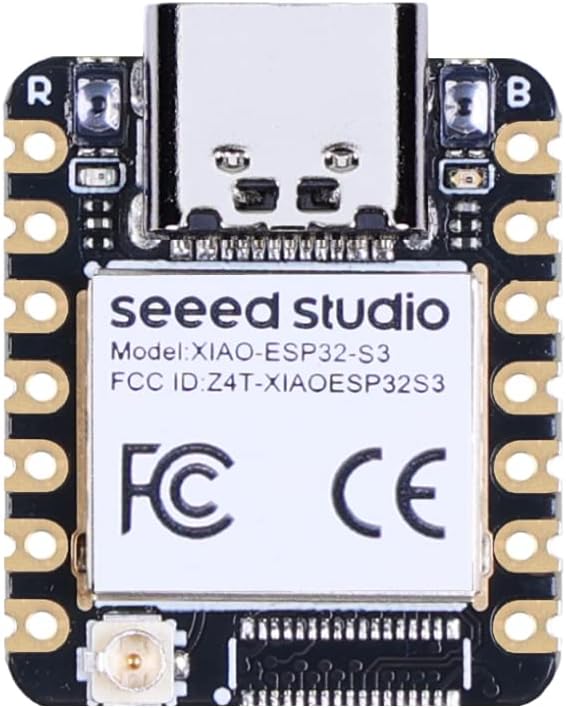
The XIAO ESP32S3 is incredibly small, making it perfect for wearable tech and tight spaces. It maintains full ESP32 capabilities despite its thumb-sized design.
We may earn a commission when you buy through this link, at no additional cost to you.
Its power efficiency is remarkable, allowing deep sleep modes that extend battery life significantly. The built-in charging support simplifies wearable project wiring.
However, it does not have a USB-C port directly on the board. You will need an adapter for programming and power.
This board suits makers building portable or wearable devices. It excels where size and efficiency matter most.
At just 21 x 17.5mm, it fits into projects that standard boards cannot.
Power consumption can drop to as low as 14μA in sleep modes.
We may earn a commission when you buy through this link, at no additional cost to you.
This board stands out for its image and voice processing capabilities. It is designed for advanced applications like machine vision and multimedia interfaces.
We may earn a commission when you buy through this link, at no additional cost to you.
The ESP32-P4 chip offers a unique RISC-V architecture with dedicated accelerators. This allows high-performance tasks that other boards struggle with.
Its specialized interfaces might be overkill for simple IoT projects. You need specific knowledge to utilize the MIPI and video features effectively.
Choose this for projects requiring visual or audio processing. It brings desktop-class features to embedded systems.
MIPI-CSI and MIPI-DSI allow direct connection to cameras and displays.
Secure boot and encryption ensure your device and data remain protected.
We may earn a commission when you buy through this link, at no additional cost to you.
This pack includes three boards, making it cost-effective for prototyping multiple devices. It offers solid performance with onboard antenna and GPIO flexibility.
We may earn a commission when you buy through this link, at no additional cost to you.
The ceramic antenna ensures reliable Wi-Fi and Bluetooth without external modules. You can solder it directly to carrier boards for compact designs.
Lacking an onboard USB port means you need a breakout board for programming. This adds complexity for single-board users.
Buy this if you need multiple units for distributed projects. It is great for teams or classroom kits.
The ceramic antenna provides stable RF performance without extra components.
Three boards allow simultaneous testing and development without extra cost.
We may earn a commission when you buy through this link, at no additional cost to you.
This kit provides a complete learning experience with the ESP-32 board at its core. It includes sensors, displays, and a structured tutorial path.
We may earn a commission when you buy through this link, at no additional cost to you.
Step-by-step guides help you learn without prior experience. You get everything needed to build smart devices immediately.
The package is large and contains many parts that may clutter a small workspace. It is meant for learning, not just a single board.
This is perfect for students and new makers. It accelerates learning by removing hardware sourcing hurdles.
Tutorials guide you from basics to advanced IoT applications systematically.
Access to motors, screens, and sensors allows diverse project possibilities.
We may earn a commission when you buy through this link, at no additional cost to you.
The Nano 33 IoT focuses on secure connectivity. It includes a built-in Secure Element for hardware encryption and reliable cloud access.
We may earn a commission when you buy through this link, at no additional cost to you.
It uses the ARM Cortex-M0+ which is efficient but slower than ESP32-S3. This suits control tasks better than heavy processing.
Its processor speed may limit advanced edge AI or complex ML tasks. However, it excels in stable connectivity.
Ideal for security-focused IoT applications. It is best when encryption is a priority.
The ATECC608A Secure Element ensures your data remains encrypted end-to-end.
Seamless cloud connectivity simplifies IoT deployment and monitoring.
We may earn a commission when you buy through this link, at no additional cost to you.
This board uses the classic ESP-WROOM-32 module which is trusted for reliability. It is a solid choice for standard IoT applications.
We may earn a commission when you buy through this link, at no additional cost to you.
The RF amp filter ensures clean wireless signals in noisy environments. It supports both AP and STA modes for flexible networking.
Bluetooth 4.2 is older than Bluetooth 5.0 on newer boards. This may limit range and efficiency.
Choose this for stable, simple IoT tasks. It works well when budget is key.
Integrated RF amplification improves signal strength for longer range.
AP and STA modes allow acting as a hotspot or connecting to one.
We may earn a commission when you buy through this link, at no additional cost to you.
These boards feature USB-C and OTA updates for convenient remote management. They are great for deployed projects requiring remote firmware changes.
We may earn a commission when you buy through this link, at no additional cost to you.
Dynamic clock scaling helps reduce power usage in connected devices. The USB-C port simplifies connections compared to micro-USB.
Bluetooth version remains 4.2 which lags behind newer standards. It is not ideal for high-bandwidth audio.
Buy this for remote IoT deployments. OTA support makes maintenance easy.
Over-the-air updates let you fix bugs without physical access.
Modern USB-C connectors make power and data transfer faster.
We may earn a commission when you buy through this link, at no additional cost to you.
The UNO R4 WiFi combines two powerful processors for diverse tasks. It supports CAN bus which is essential for automotive and industrial systems.
We may earn a commission when you buy through this link, at no additional cost to you.
The 12-bit DAC and OP AMP enable precise analog control. The built-in LED matrix offers immediate visual feedback without external screens.
It is larger than Nano boards and requires more space. Complexity is higher due to dual-core features.
This board is best for advanced applications needing industrial features. It bridges IoT and control systems.
CAN bus support makes it suitable for automotive and factory control systems.
The onboard LED matrix displays status and messages directly.
We may earn a commission when you buy through this link, at no additional cost to you.
Choosing the right board depends on your project needs. Here are key factors to consider when selecting your microcontroller.
Processor power dictates how much data you can handle. Look for dual-core chips like the ESP32-S3 for multitasking and edge processing. Higher clock speeds mean faster execution.
Choose a faster processor for complex tasks and simple ones for basic control.
Wi-Fi and Bluetooth versions affect range and speed. Bluetooth 5.0 supports longer range and lower energy usage. Ensure the board supports your network needs.
Opt for latest Bluetooth and Wi-Fi standards for best connectivity.
RAM and Flash determine how many programs and data you can store. Boards with extra PSRAM are better for image or audio data. Check memory specs against project size.
Select sufficient memory to avoid runtime errors.
Power efficiency is critical for battery projects. Look for deep sleep modes and adjustable power settings. Boards with low quiescent current save energy.
Choose power-saving boards for portable devices.
The type of USB port affects ease of use. USB-C is faster and reversible. Also check for extra headers or connectors like Qwiic.
Prioritize USB-C and flexible headers for convenience.
Official boards come with official support and documentation. Community boards rely on forums. Decide if official help matters for your learning curve.
Official boards offer better documentation for beginners.
Size matters for wearables or tight spaces. Nano variants are ideal for small designs. Ensure your chosen board fits your enclosure.
Choose a compact form factor for space-sensitive projects.
Some boards have unique features like LED matrices or CAN bus. Consider if these extras add value. They might be essential for specific industrial or display apps.
Pick boards with features that match your app requirements.
Start by connecting the board to your computer via USB-C. Install the latest Arduino IDE or MicroPython drivers to flash code.
Ensure you configure your power supply correctly to avoid voltage spikes that can damage the chip.
Store boards in a dry environment and avoid touching pins to prevent static discharge.
Yes, it is fully compatible. You can install the board package to enable support.
Yes, all ESP32-S3 boards listed support MicroPython for easy scripting.
Most modern boards in this list support Bluetooth 5.0 for better range.
Most boards accept 3.3V logic but check specific docs for voltage limits.
Yes, especially boards with CAN support or industrial interfaces.
Most have onboard antennas but external ones boost range further.
Yes, firmware can be updated wirelessly on most boards.
Connect to a LiPo and use boards with battery management.
The Arduino Nano ESP32 offers unmatched performance in a small package. The best choice depends on your project needs.
Consider connectivity, power, and features like Python support when buying.
Always check prices and availability before purchasing for best deals.